
Home › Academy › Storage & Handling › Shipping Stability
Storage & Handling
Shipping Stability
Why the lyophilized form travels well at ambient temperature — and what that does (and doesn't) mean.
Last updated: 2026-07-12 · ~7 minutes
On this page
Every shipment is a short test of a material’s stability. For lyophilized compounds, it is a test the dry form passes comfortably — which is why these products travel at ambient temperature rather than under refrigeration.
This article is general and educational, for laboratory and research contexts only.
Key takeaways
- Shipping stability means material arrives in essentially the condition it left.
- The lyophilized form is temperature-tolerant and ships well at ambient temperature.
- High Tide ships via FedEx within the US, usually within about a business day, in discreet packaging.
- Ambient transit is not a long-term storage recommendation — they are different questions.
- Store material appropriately on arrival; shipping stability does not replace the COA.
What shipping stability means
Shipping stability is a simple idea: material should arrive in essentially the condition it left. Transit is a brief but real test — packages move through varying temperatures and handling before they reach a destination. Whether that matters depends heavily on the form of the material, and the lyophilized form is well suited to travel.
Why lyophilized material travels well
The same property that makes the dry form store well makes it ship well: with the water removed, the processes that degrade material are slowed, and the material is comparatively tolerant of ambient temperature. Add a short transit time and protective packaging, and a lyophilized compound can move through ordinary shipping conditions without the elaborate temperature control that a sensitive solution might demand.
LYOPHILIZED PRODUCTS SHIP AT AMBIENT TEMPERATURE
Because the peptides are lyophilized, they do not require refrigeration or a cold chain during shipping. The dry form tolerates ambient transit; longer-term storage is a separate question covered in Storage Temperatures.
How the material actually ships
In practice, orders move through a normal parcel network. High Tide Compounds ships within the United States via FedEx, typically processing orders within about one business day, in discreet packaging without product descriptions on the exterior. Transit is designed to be prompt, which keeps the window of exposure short — another reason the dry form’s tolerance is more than sufficient.
| Aspect | General practice |
|---|---|
| Carrier / coverage | FedEx; United States only. |
| Processing | Typically within about one business day. |
| Packaging | Discreet; no product descriptions on the exterior. |
| Temperature in transit | Ambient; no cold chain required for the lyophilized form. |
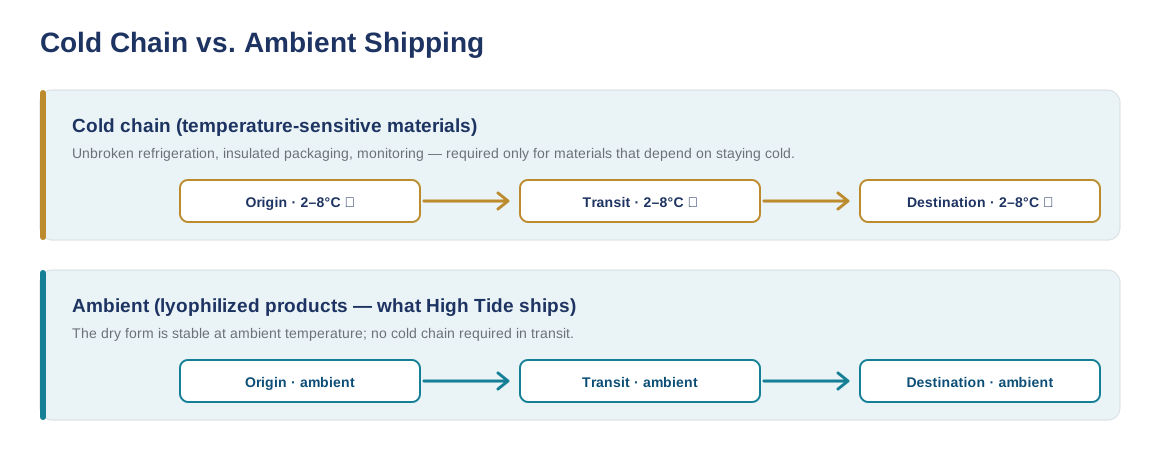
The lyophilized dry form ships ambient; cold chain applies once reconstituted.
Transit condition is not a long-term storage recommendation
It is worth repeating a distinction from earlier in this cluster: the fact that material ships at ambient temperature says nothing about how it should be kept for the long term. Ambient transit is fine for a dry, stable form over a short window; long-term storage may still favor cooler conditions. Do not read a shipping condition as a storage instruction.
On arrival
Responsibility for a shipment transfers to the customer once it is handed to the carrier and tracking is issued, and proper storage and handling on receipt rest with the recipient. Practically, that means a sensible arrival routine: confirm the package and its contents, and move material into appropriate storage per the product’s guidance. The dry form’s tolerance gives some margin, but good storage from the moment of receipt preserves it.
VERIFY PRODUCT-SPECIFIC HANDLING
General shipping stability applies to the lyophilized form broadly. For a specific product’s storage on arrival, follow its product page; where a detail is not yet stated, [CONFIRM WITH HIGH TIDE COMPOUNDS].
Stability in transit versus the quality behind it
Shipping stability concerns whether material survives the journey unchanged; it does not establish what the material was to begin with. That comes from the testing documented on the Certificate of Analysis. A stable-in-transit dry form and a solid COA answer different questions and, together, describe both what you received and that it arrived intact.
Frequently asked questions
No. Because they are lyophilized, they ship at ambient temperature without a cold chain. The dry form tolerates the short transit window.
Within the United States via FedEx, typically processed within about one business day, in discreet packaging without product descriptions on the exterior.
Not necessarily. Ambient transit over a short window is different from long-term storage, which may favor cooler conditions. Follow the product’s storage guidance.
Confirm the package and contents and move the material into appropriate storage per its product page. Responsibility for the shipment rests with the recipient on receipt.
Glossary terms
Company standard
Continue learning
- Storage Temperatures — why ambient transit works and long-term may differ.
- Cold Chain Basics — what a cold chain is, and why it isn’t needed here.
- What Is Lyophilization? — the property behind shipping stability.
- Shipping Standards — how High Tide handles fulfillment.
Research Use Only
All materials referenced are for laboratory research purposes only and are not for human or veterinary use. This article is educational and does not provide medical advice, dosing, or instructions for use.