
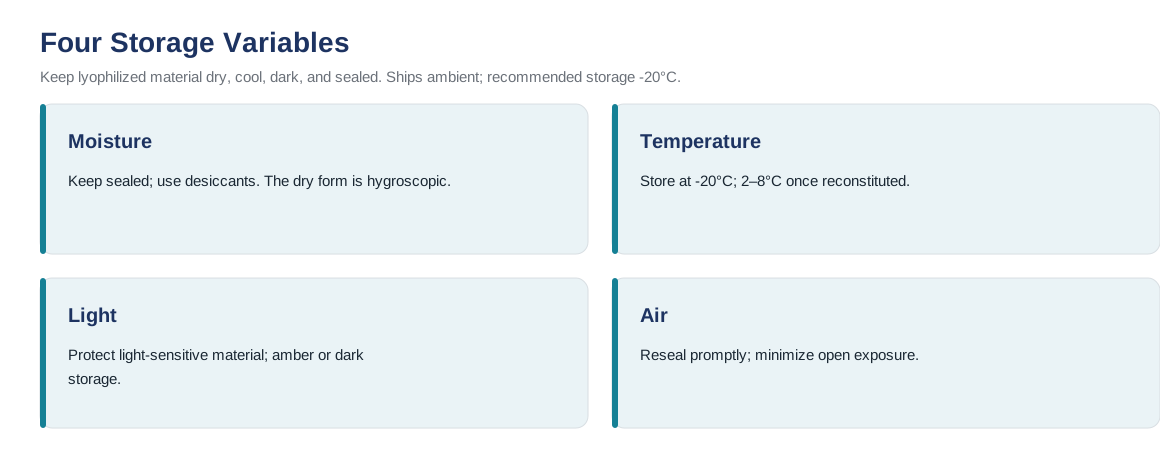
Research peptides are supplied as a dry, freeze-dried solid, and much of how they store and ship follows from that. This cluster starts with lyophilization itself, then works through the variables preservation actually depends on: moisture, temperature, light, and air.
It also separates two questions that are easy to conflate — how material travels and how it should be kept. Ambient shipping suits a stable dry form over a short window; long-term storage is a different question. Figures for a specific product always come from that product’s page rather than from these general articles.
The four variables that act on stored material.
Freeze-drying explained — and why the dry form is what lets material ship without refrigeration.
Controlling moisture, temperature, light, and air — and handling dry vs. reconstituted material.
Room, refrigerated, frozen — and why the lyophilized form is more temperature-tolerant than a solution.
Why lyophilized material must stay dry — hygroscopicity, desiccants, seals, and condensation.
When light matters for storage, when it doesn't, and how to protect light-sensitive material.
Why the lyophilized form travels well at ambient temperature — and what that does (and doesn't) mean.
What a cold chain is, when it's essential — and why lyophilized products don't require one.