
Home › Academy › Getting Started › Choosing a Research Supplier
Getting Started
Choosing a Research Supplier
A verifiability-first checklist: what to look for, the warning signs, and how to evaluate in practice.
Last updated: 2026-07-12 · ~6 minutes
On this page
The supplier you choose determines how much of what you receive you can actually verify. This article turns that into a simple, durable checklist — useful for evaluating any supplier, not just this one.
This article is educational and describes how to evaluate suppliers of Research Use Only materials; it does not concern human or veterinary use.
Key takeaways
- Evaluating a supplier comes down to one question: can you verify quality, or must you trust it?
- Good signs: batch-specific COAs, independent testing, clear RUO positioning, traceability, documented claims.
- Warning signs: unverifiable superlatives, missing or unmatched COAs, human-use marketing, vague testing.
- Evaluate in practice by matching a COA to the batch and checking named methods and RUO consistency.
- The checklist is durable: the questions worth asking outlast any particular catalog.
Why the supplier matters
In a field where descriptions can be vague and claims are easy to make, the supplier you choose shapes how much you can trust what you receive. Evaluating a supplier is really about one question: does it give you the means to verify quality yourself, or does it ask you to take quality on faith? The criteria below turn that question into specifics.
What to look for
A few signals separate a documentation-led supplier from a marketing-led one.
| Look for | Why it matters |
|---|---|
| Batch-specific Certificates of Analysis | Ties documentation to the exact lot you receive, not the product in general. |
| Independent third-party testing | Adds an outside check without a stake in the outcome. |
| Clear Research Use Only positioning | Signals honest scope and consistent, compliant communication. |
| Consistency and traceability | Shows quality is a property of the process, batch after batch. |
| Transparent, documented claims | Evidence over adjectives — you can check what is stated. |
| Responsive, knowledgeable support | Access to answers when documentation leaves a question. |
Warning signs
Just as informative are the signals that a supplier leans on marketing rather than evidence.
- Unverifiable superlatives — “purest,” “highest quality,” “guaranteed” — with nothing to substantiate them.
- Missing or generic COAs, or documentation that cannot be matched to the batch you received.
- Marketing that implies human or veterinary use, or any therapeutic benefit, despite RUO status.
- Vague testing claims with no named methods, or no way to verify who performed the testing.
QUALITY NOTE — THE THROUGH-LINE
Nearly every good sign reduces to verifiability, and nearly every warning sign reduces to being asked to trust a claim you cannot check. A supplier that shows its work is doing the thing that matters most.
How to evaluate in practice
Put the criteria to work: look for a COA and confirm it matches the batch; check whether testing is independent and whether methods are named; read the product and site language for RUO consistency; and note whether support is reachable and informed. None of these steps is difficult, and together they tell you quickly whether a supplier is built around documentation or around persuasion.
How High Tide Compounds approaches this
These criteria are also the standards High Tide Compounds holds itself to — batch-specific COAs, independent testing, clear RUO positioning, and quality shown through documentation rather than superlatives. The Company Standards cluster lays out that approach in detail, including the Seven-Point Quality Program and the commitment to transparency. The point of this article, though, is broader than any one supplier: it is a checklist you can apply anywhere.
A durable checklist
Suppliers, catalogs, and marketing change; the questions worth asking do not. Can I see a batch-specific COA? Is testing independent, with named methods? Is the RUO positioning consistent? Is support reachable? Keep those questions close, and the choice of a research supplier becomes a matter of evidence rather than impression.
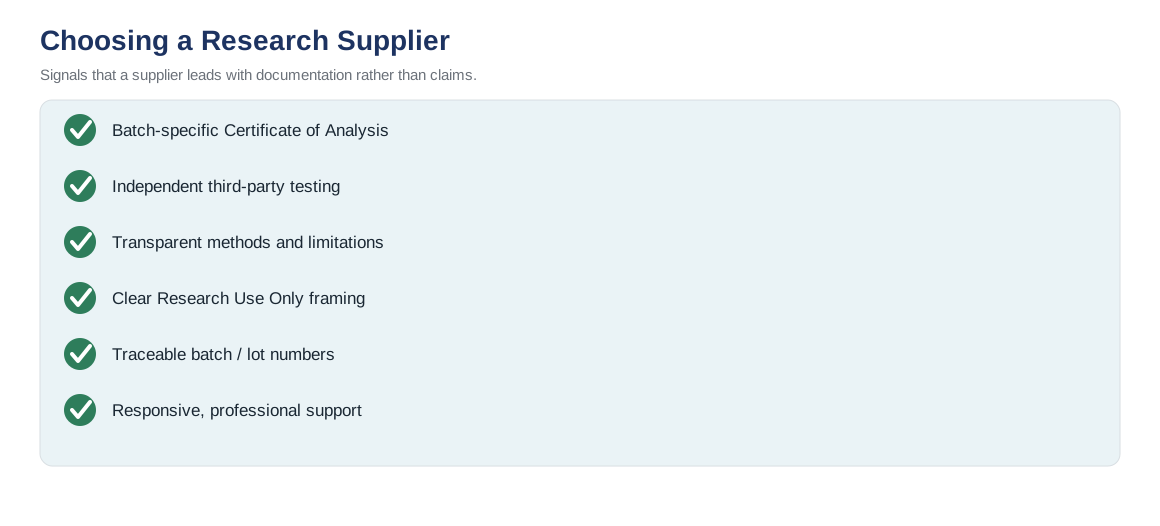
Documentation-first signals when choosing a research supplier.
Frequently asked questions
Whether you can verify quality yourself — above all, a batch-specific Certificate of Analysis you can match to the material you received.
Because batches can differ. A COA tied to your specific lot describes what you actually received, while a general certificate does not.
Unverifiable superlatives, missing or unmatched COAs, marketing that implies human use despite RUO status, and testing claims with no named methods or verifiable source.
It holds itself to them — batch-specific COAs, independent testing, and clear RUO positioning. The Company Standards cluster describes its approach in detail.
Related articles
Company standard
Continue learning
- Understanding Certificates of Analysis — the document at the center of the checklist.
- Third-Party Testing — what independent testing adds.
- Research Use Only Explained — the positioning to look for.
- Seven-Point Quality Program — how High Tide applies these standards.
Research Use Only
All materials referenced are for laboratory research purposes only and are not for human or veterinary use. This article is educational and does not provide medical advice, dosing, or instructions for use.