
Home › Academy › Storage & Handling › Moisture Protection
Storage & Handling
Moisture Protection
Why lyophilized material must stay dry — hygroscopicity, desiccants, seals, and condensation.
Last updated: 2026-07-12 · ~6 minutes
On this page
If lyophilization is about taking water out, moisture protection is about keeping it out. For dry research material it is the storage concern most directly connected to why the material was freeze-dried in the first place.
This article is general and educational, for laboratory and research contexts only.
Key takeaways
- Moisture works directly against the stability that lyophilization provides.
- Many lyophilized solids are hygroscopic — they actively draw water from the air.
- Sealed containers and desiccants together keep material and its environment dry.
- Condensation is a hidden risk: let cold containers warm before opening.
- Moisture control works alongside temperature, light, and air management.
Why moisture is the main enemy of dry material
Lyophilization exists to remove water, so it should be no surprise that letting water back in works against the whole point of the dry form. Moisture can undermine the stability that freeze-drying provides, which makes moisture control the central concern when storing lyophilized material. Much of good storage practice is, in one way or another, about keeping water away from a solid that would rather absorb it.
Hygroscopic materials
Many lyophilized solids are hygroscopic — they tend to draw moisture out of the surrounding air. A hygroscopic material left exposed to humid conditions can take up water over time, which is why simply capping a container is not always enough on its own. Understanding that the material is actively pulling moisture from the air reframes storage from passive to something worth managing deliberately.
DEFINITION — HYGROSCOPIC
Describing a material that tends to absorb moisture from the surrounding air. Many lyophilized solids are hygroscopic, which is why they are protected from humidity.
Sealed containers and desiccants
Two tools do most of the work. Sealed, airtight containers limit the exchange of humid air with the material. Desiccants — materials that absorb moisture — help keep the immediate environment dry, capturing stray moisture that would otherwise reach the solid. Used together, a good seal and an appropriate desiccant address the moisture problem from both directions.
DEFINITION — DESICCANT
A material that absorbs moisture from its surroundings, used to keep the local storage environment dry (for example, inside a sealed container).
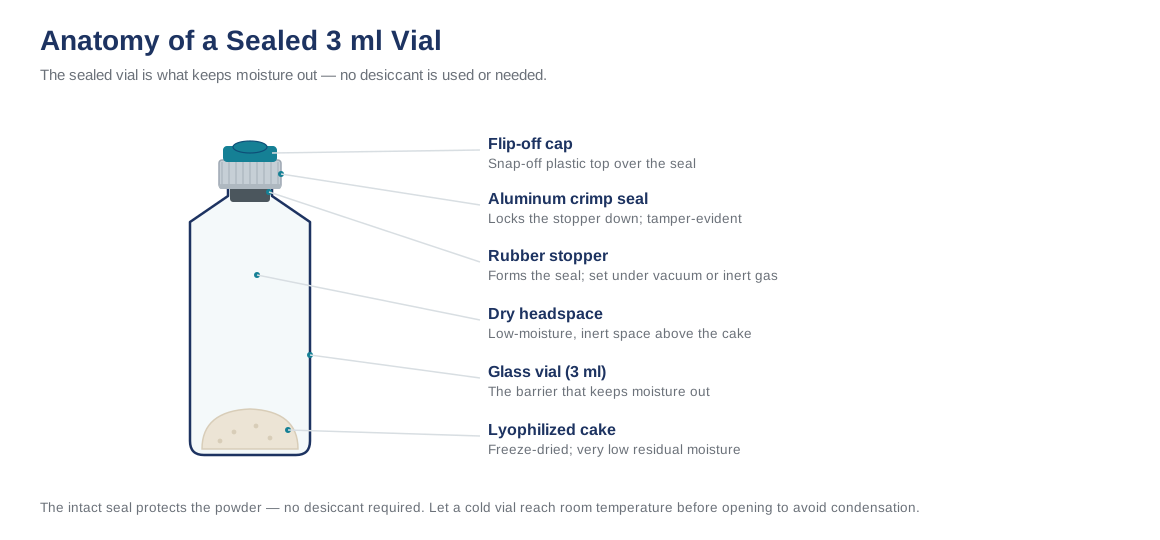
The seal — not a desiccant — is what keeps moisture out of a sealed vial.
Condensation: the cold-container trap
A subtle but common source of moisture is condensation. When a cold container is opened in warmer, humid air, moisture from that air can condense on and inside it — delivering water directly to material you were trying to keep dry. The usual precaution is to let a cold container warm to room temperature before opening, so that condensation forms on the outside, if at all, rather than reaching the contents.
PRACTICAL NOTE — WARM BEFORE OPENING
Allowing a chilled container to reach room temperature before opening reduces the risk of condensation forming on the material inside. It is a small habit that protects the benefit of dry storage.
Humidity and handling
- Work in reasonably controlled conditions; avoid exposing dry material to visibly humid air for longer than necessary.
- Keep containers closed except when actively in use, limiting the total time material is open to the air.
- Replace or maintain desiccants as appropriate so they remain effective.
- Reseal promptly after handling to restore the protective environment.
How moisture protection fits with the rest of storage
Moisture control does not stand alone; it works alongside temperature, light, and air management covered elsewhere in this cluster. But for lyophilized material it is often first among equals — the variable most directly tied to the reason the material was dried in the first place. Protecting the dry form from water is, in a real sense, protecting the work that lyophilization did.
Frequently asked questions
Freeze-drying removes water to improve stability. Letting moisture back in undermines that benefit, so keeping the dry form dry is a central storage priority.
It describes a material that tends to absorb moisture from the surrounding air. Many lyophilized solids are hygroscopic, which is why they are protected from humidity.
It absorbs moisture from its surroundings, helping keep the storage environment dry — for example, inside a sealed container with the material.
Opening a cold container in warmer, humid air can cause condensation that delivers moisture to the material. Warming it first reduces that risk.
Glossary terms
Company standard
Continue learning
- What Is Lyophilization? — why the dry form is moisture-sensitive.
- Storage Best Practices — moisture in the context of all storage variables.
- Storage Temperatures — how temperature and condensation interact.
- Light Exposure — another storage variable to manage.
Research Use Only
All materials referenced are for laboratory research purposes only and are not for human or veterinary use. This article is educational and does not provide medical advice, dosing, or instructions for use.