
Home › Academy › Company Standards › Packaging Standards
Company Standards
Packaging Standards
Protecting the material and respecting privacy — discreet packaging and protective case options.
Last updated: 2026-07-12 · ~4 minutes
On this page
Packaging is where quality meets the doorstep. This page describes how High Tide Compounds packages orders — to protect the material and to respect the customer’s privacy.
The content is descriptive and educational, within a Research Use Only context.
Key takeaways
- Packaging protects the material and respects the customer’s privacy.
- Orders ship in discreet packaging with no product descriptions on the exterior.
- The lyophilized form is robust in transit; packaging adds physical protection.
- A free small case is included on 4+ vials, a free large case on 10+ vials.
- Exact packaging specifications should be confirmed directly.
What packaging is for
Packaging does two jobs at once: it protects the material on its journey, and it respects the customer’s privacy. For lyophilized research compounds, protection means keeping vials secure and the dry form intact through transit; privacy means shipments that do not advertise their contents. High Tide Compounds’ packaging standards are built around both.
Discreet packaging
Shipments are packaged discreetly, without product descriptions on the exterior. Nothing on the outside identifies the contents. This is a deliberate standard: privacy is part of a professional customer experience, and discreet packaging is how that is delivered in practice.
CONFIRMED STANDARD — DISCREET PACKAGING
Orders are shipped in discreet packaging with no product descriptions on the exterior. (Consistent with the Shipping Policy.)
Protecting the material
Because the products are lyophilized, they are comparatively robust in transit — the dry form tolerates ambient temperature, as covered in the Storage & Handling cluster. Packaging still protects the vials physically, guarding against damage in handling. The Shipping Stability article explains why the dry form travels well; packaging is the physical complement to that stability.
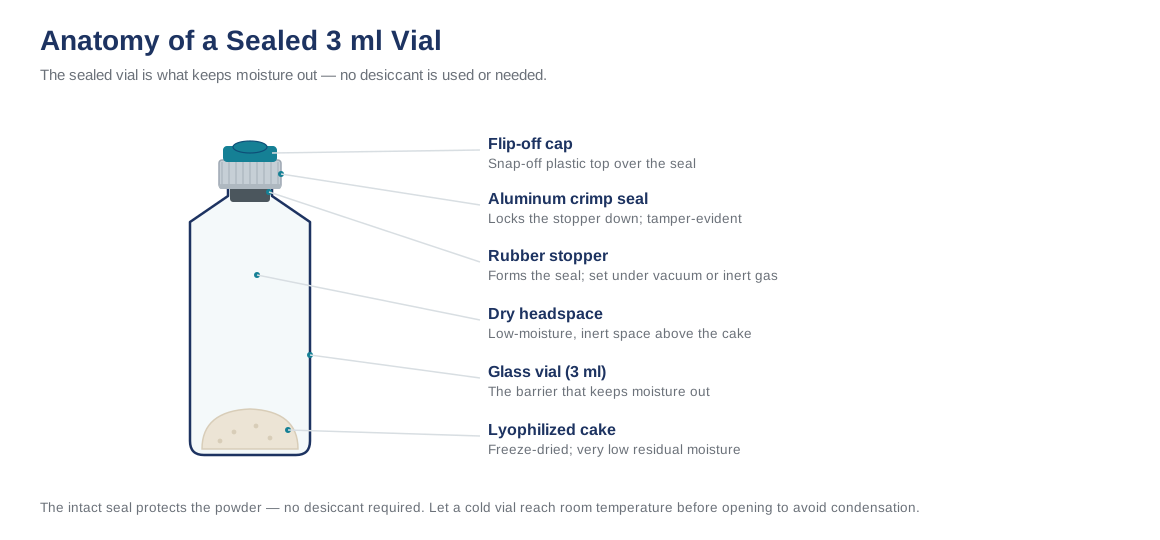
The seal — not a desiccant — is what keeps moisture out of a sealed vial.
Case options
High Tide Compounds offers protective cases with qualifying orders. A free small case is included on orders of four or more vials, and a free large case on orders of ten or more. These cases give customers a practical way to keep vials organized and protected — a small extension of the same protect-and-organize thinking behind the packaging itself.
| Order size | Included case |
|---|---|
| 4+ vials | Free small case |
| 10+ vials | Free large case |
Details to confirm
Some packaging specifics are best confirmed directly rather than stated as general fact.
VERIFY WITH HIGH TIDE COMPOUNDS
Exact packaging materials, vial specifications, and any protective inserts are product- and operations-specific. This page describes the packaging standards in general; for precise specifications, confirm directly. [CONFIRM WITH HIGH TIDE COMPOUNDS]
Packaging within the bigger picture
Packaging standards sit alongside shipping and storage as the practical, post-testing side of quality. Testing establishes what a material is; packaging and shipping get it to the customer intact and privately; and storage keeps it that way on arrival. The Shipping Standards and Storage Best Practices articles cover the neighboring pieces.
Frequently asked questions
Yes. Orders ship in discreet packaging with no product descriptions on the exterior.
A free small case is included on orders of four or more vials, and a free large case on orders of ten or more.
The lyophilized form is comparatively robust in transit; packaging protects the vials physically. Exact specifications are best confirmed directly.
Glossary terms
Company standard
Continue learning
- Shipping Standards — how orders are shipped.
- Shipping Stability — why the lyophilized form travels well.
- Storage Best Practices — handling material on arrival.
- Why High Tide Compounds — the standards behind the experience.
Research Use Only
All materials referenced are for laboratory research purposes only and are not for human or veterinary use. This article is educational and does not provide medical advice, dosing, or instructions for use.