
Home › Academy › Storage & Handling › Light Exposure
Storage & Handling
Light Exposure
When light matters for storage, when it doesn't, and how to protect light-sensitive material.
Last updated: 2026-07-12 · ~6 minutes
On this page
Light is the quietest of the storage variables — easy to forget precisely because it does nothing visible until it does. For light-sensitive materials, managing exposure is straightforward once you know it matters; for others, it barely registers.
This article is general and educational, for laboratory and research contexts only.
Key takeaways
- Light can drive chemical change (photodegradation) in light-sensitive materials.
- Sensitivity depends on the compound — many materials are unaffected by ordinary light.
- UV light is often the greater concern, though visible light can matter too.
- Amber or opaque containers and dark storage protect susceptible material.
- Treat light as a variable to check, defaulting to dark storage when in doubt.
How light can affect a material
Light carries energy, and for some compounds that energy can drive chemical change — a process broadly called photodegradation. When a material is light-sensitive, exposure over time can alter it, which is why light is counted among the storage variables worth managing. The effect is not universal: many materials are indifferent to ordinary light, while others are more susceptible. Knowing which situation applies is the starting point.
DEFINITION — PHOTODEGRADATION
Chemical change in a material caused by exposure to light. Materials prone to it are described as light-sensitive or photosensitive.
Not every material is light-sensitive
It is worth stating plainly: light protection matters for some materials and is largely irrelevant for others. Sensitivity depends on the specific compound. Because of that, light exposure is best treated as a variable to check rather than a universal rule to apply everywhere. Where a material is known or expected to be light-sensitive, the precautions below apply; where it is not, they add little.
UV and visible light
Light spans a range, and different portions carry different amounts of energy. Ultraviolet (UV) light is more energetic than visible light and is often the greater concern for photosensitive materials, though visible light can matter too depending on the compound. Ordinary environments contain both from sources such as sunlight and some artificial lighting, which is why protection focuses on reducing overall exposure rather than filtering one wavelength.
Protective containers and dark storage
The practical tools are simple. Amber or opaque containers reduce how much light reaches the material, and storing material in the dark — a closed cabinet or box — removes the exposure almost entirely. Additional wrapping, such as foil, can further shield light-sensitive material. For most purposes, keeping susceptible material in an opaque container in a dark place addresses the concern well.
PRACTICAL NOTE — DEFAULT TO DARK FOR THE SENSITIVE
When a material is known or suspected to be light-sensitive, the low-effort default is an opaque container stored in the dark, with exposure to bright light minimized during handling.
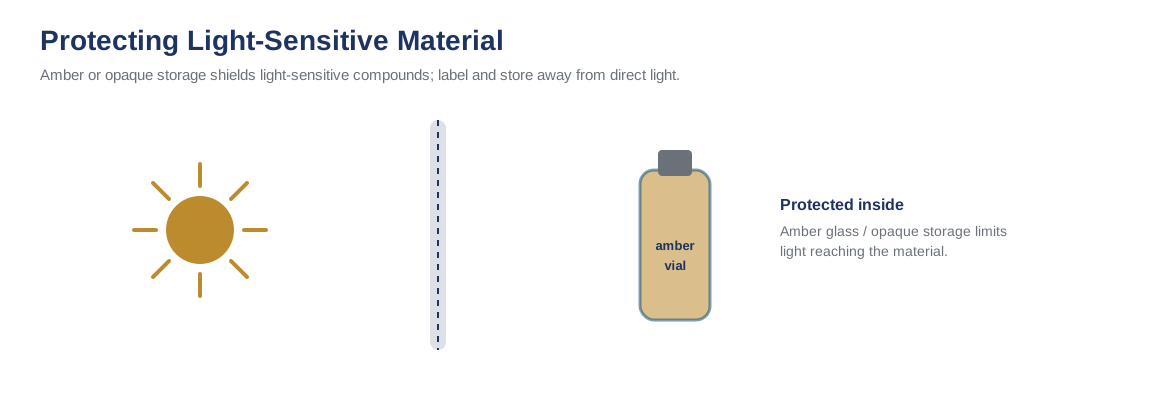
Amber or opaque storage for light-sensitive material.
Handling to limit exposure
- Keep light-sensitive material in opaque or amber containers rather than clear ones.
- Store in a dark, enclosed space rather than under lighting or near windows.
- Minimize the time material spends exposed to bright light while handling.
- Reseal and return material to dark storage promptly after use.
Light in the wider storage picture
Light protection is one variable among several — moisture, temperature, and air being the others covered in this cluster. For light-sensitive materials it can be important; for others it recedes. Reading a product’s guidance, and defaulting to sensible protection when in doubt, keeps light from becoming an overlooked source of change while avoiding effort where it is not needed.
Frequently asked questions
No. Only light-sensitive materials are affected; sensitivity depends on the specific compound. Many materials are unaffected by ordinary light.
Chemical change in a material caused by exposure to light. Materials prone to it are described as light-sensitive or photosensitive.
Keep it in amber or opaque containers, store it in the dark, and minimize exposure to bright light during handling.
UV is more energetic and often the greater concern, but visible light can matter depending on the compound, so protection reduces overall exposure.
Related articles
Glossary terms
Company standard
Continue learning
- Storage Best Practices — light alongside moisture, temperature, and air.
- Moisture Protection — the companion variable for dry material.
- Storage Temperatures — temperature as a storage lever.
- What Is Lyophilization? — the dry form these variables apply to.
Research Use Only
All materials referenced are for laboratory research purposes only and are not for human or veterinary use. This article is educational and does not provide medical advice, dosing, or instructions for use.