
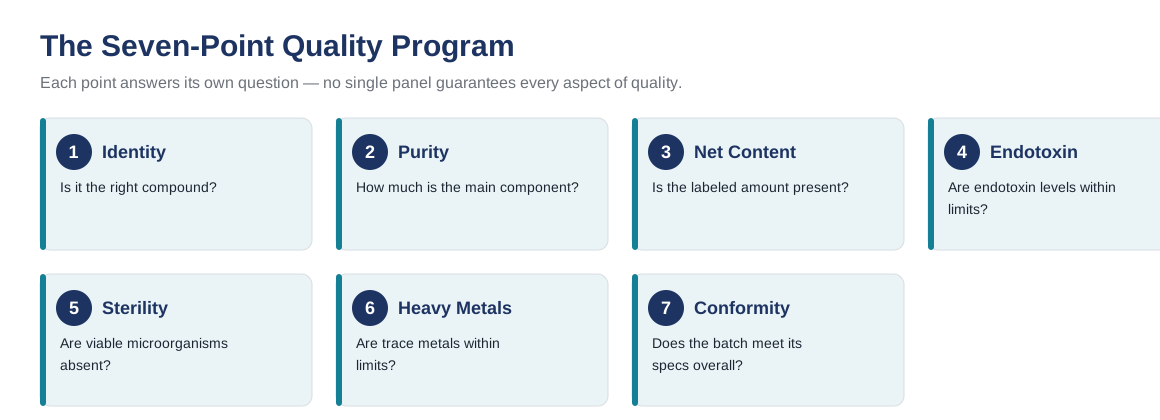
Quality is not one measurement but several, and this cluster takes them one at a time. It begins with the document where results become visible — the Certificate of Analysis — then works through what each individual test establishes: identity, purity, sterility, endotoxin, heavy metals, and net content.
Two themes run throughout. A result is only interpretable alongside the method that produced it, and every test answers its own question while staying silent on the others. The HPLC and LC-MS articles cover the two methods behind most purity and identity figures, and Batch Consistency explains why documentation is written per batch rather than per product.
The seven-point quality framework at a glance.
What a COA is, what each section reports, and — just as important — what it cannot tell you.
A field-by-field walkthrough: what to check, in what order, and the warning signs to catch.
Is the material the compound it claims to be? How identity is established — and why it comes first.
What a purity percentage really measures, how area percentage works, and what it leaves unanswered.
A microbiological question, not a chemical one: what sterility testing shows, and its limits.
Why a sterile material can still carry endotoxins — and why it is a separate test.
Targeted trace analysis for specific contaminant elements — units, limits, and context.
A question of amount, not composition: measured quantity versus the labeled amount.
What independent testing adds, what it depends on, and why it is one pillar of quality — not the whole.
How High-Performance Liquid Chromatography separates a sample — and why it excels at purity.
Separation plus mass analysis: how liquid chromatography and mass spectrometry support identity.
Why batches are not assumed identical, and how consistency is demonstrated rather than declared.