
Home › Academy › Quality & Testing › Batch Consistency
Quality & Testing
Batch Consistency
Why batches are not assumed identical, and how consistency is demonstrated rather than declared.
Last updated: 2026-07-12 · ~8 minutes
On this page
The word “batch” runs through every article in this cluster for a reason. Consistency between production runs is not a given — it is something a quality system works to achieve and, just as importantly, to demonstrate. This article draws the threads together.
The content is conceptual and educational, for laboratory and research contexts only.
Key takeaways
- Batch consistency is how closely separate runs of a material match — a goal, not an assumption.
- Batches are not assumed identical; small process differences can produce measurable variation.
- Process control narrows variation; specifications and per-batch testing make consistency measurable.
- Trend review across many batches shows whether results stay stable or drift.
- Traceability and per-batch records are how consistency is demonstrated rather than merely claimed.
What batch consistency means
Batch consistency is the degree to which separate production runs of the same material turn out the same. It is not an assumption but a goal — something a quality system works toward and documents, batch by batch. The reason the whole Quality & Testing cluster keeps returning to the word “batch” is that consistency between batches cannot be taken for granted; it has to be demonstrated.
DEFINITION — BATCH CONSISTENCY
The degree to which separate batches of the same material meet the same specifications and behave the same way, demonstrated through per-batch testing and documentation.
Why batches are not assumed identical
Two runs of the same material can differ. Small variations in starting materials, synthesis, purification, handling, or storage can produce measurable differences from one batch to the next. Treating batches as automatically identical would paper over exactly the differences a quality system exists to catch. This is why documentation is written for a specific lot rather than for a product in general, and why a COA applies to one batch.
Process control
Consistency starts before testing, in how a material is made and handled. Process control means running production under defined, repeatable conditions so that outputs tend to fall within the same range each time. Good process control does not eliminate variation, but it narrows it — making consistent batches the expected result rather than a happy accident. Testing then verifies that the process actually delivered.
Specifications and batch-specific testing
Specifications are the shared yardstick that makes consistency measurable. When each batch is tested against the same specifications — for identity, purity, and the other attributes in the program — consistency becomes visible as batches repeatedly meeting the same criteria. Batch-specific testing is what turns “we aim for consistency” into a documented record for each lot.
| Concept | Role in consistency |
|---|---|
| Process control | Keeps production conditions repeatable, narrowing variation. |
| Specifications | The shared criteria every batch is measured against. |
| Batch-specific testing | Verifies each lot against those specifications. |
| Documentation | Records the result for each batch, enabling comparison. |
Trend review
Individual batch records tell you about one lot; looking across many records tells you about the process. Trend review is the practice of examining results over multiple batches to see whether they stay stable or drift. A single passing batch is good; a long series of batches consistently meeting specifications is stronger evidence that consistency is real and maintained.
Change control and traceability
When something in a process changes — a supplier, a method, a step — consistency can be affected, so changes are managed deliberately rather than made casually. Change control is that deliberate management. Underpinning all of it is traceability: the ability to link a batch to its records, its testing, and the conditions under which it was produced. Without traceability, none of the other practices can be verified after the fact.
DEFINITION — TRACEABILITY
The ability to link a specific batch to its production conditions, testing, and documentation, so its history can be followed and verified.
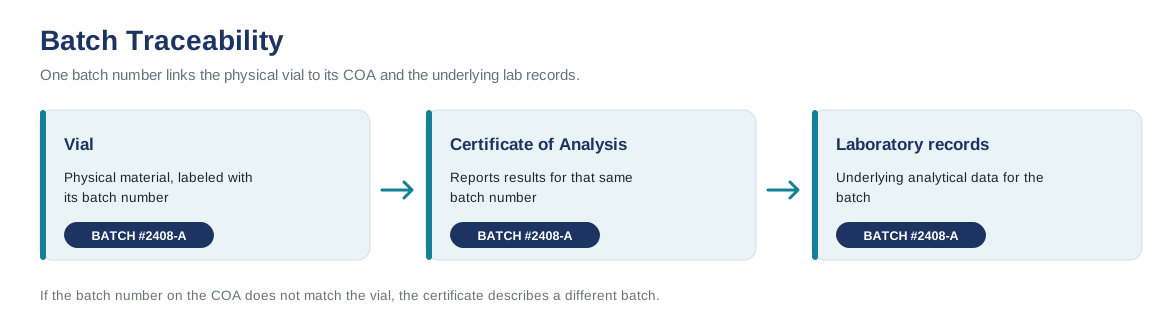
One batch number links the vial, its COA, and the laboratory records.
Why each batch requires its own records
Everything above leads to one conclusion: each batch earns its own documentation. Because batches are not assumed identical, a certificate from one lot does not vouch for another, and consistency is something demonstrated across lots rather than declared once. Per-batch records — tied together by traceability and reviewed for trends — are how a supplier shows that consistency is a property of its process, not just a claim on a page.
Frequently asked questions
Small differences in starting materials, synthesis, purification, handling, or storage can produce measurable variation, so each batch is tested and documented rather than assumed identical.
Through process control, testing each batch against shared specifications, documenting the results, and reviewing trends across many batches over time.
Because batches can differ, a certificate describes the specific lot that was tested. It does not vouch for other batches.
It links a batch to its production conditions, testing, and records, so its history can be followed and verified after the fact.
Company standard
Continue learning
- Understanding COAs — why documentation is batch-specific.
- Third-Party Testing — independent verification of batches.
- Reading a Certificate of Analysis — matching a certificate to your batch.
- Seven-Point Quality Program — the framework applied to each batch.
Research Use Only
All materials referenced are for laboratory research purposes only and are not for human or veterinary use. This article is educational and does not provide medical advice, dosing, or instructions for use.